.png)
If you're an ecommerce manager running a Shopify store, you already know how painful it is to get a new collection live. Product images land from photographers in a WeTransfer link, get downloaded and renamed by someone, uploaded to Dropbox or a Google Drive, and then manually added to Shopify…one product at a time.
It's slow, fiddly, and (the good news) entirely avoidable.
That's why we built the Dash Shopify integration. It connects your Dash asset library directly to your Shopify store, so you can get products live faster and spend less time on repetitive admin.
Here's everything you need to know about it.
Why we built a native Shopify integration
Dash is built for ecommerce brands who move fast. Many of our customers use Shopify as their primary selling platform. And the biggest bottleneck they face isn't creating great imagery, it's getting that imagery into their live efficiently.
Shopify's native media manager is fine for basic storage, but it’s not a creative library. There's no search, no version control, and no way to organise assets by SKU or product line. It makes launching and updating products slow and cumbersome..
We wanted to change that. The Dash Shopify connector means your asset library and your Shopify store work together, and do a lot of the heavy lifting for you.
Two ways to use the integration
There are two ways to use the Shopify integration. First, for single product updates, perfect for day-to-day updates and brands with fewer SKUs. Secondly, for updating entire product catalogues in bulk. Let’s get into them.
Updating a single product page
For day-to-day updates and— swapping out a hero image, adding a new lifestyle shot, refreshing assets after a reshoot — Dash works directly inside Shopify.
1. Open any product in your Shopify store.
2. Click More actions in the menu bar and select ‘Use image from Dash’.

4. Browse, search, and filter your full Dash library from within Shopify.
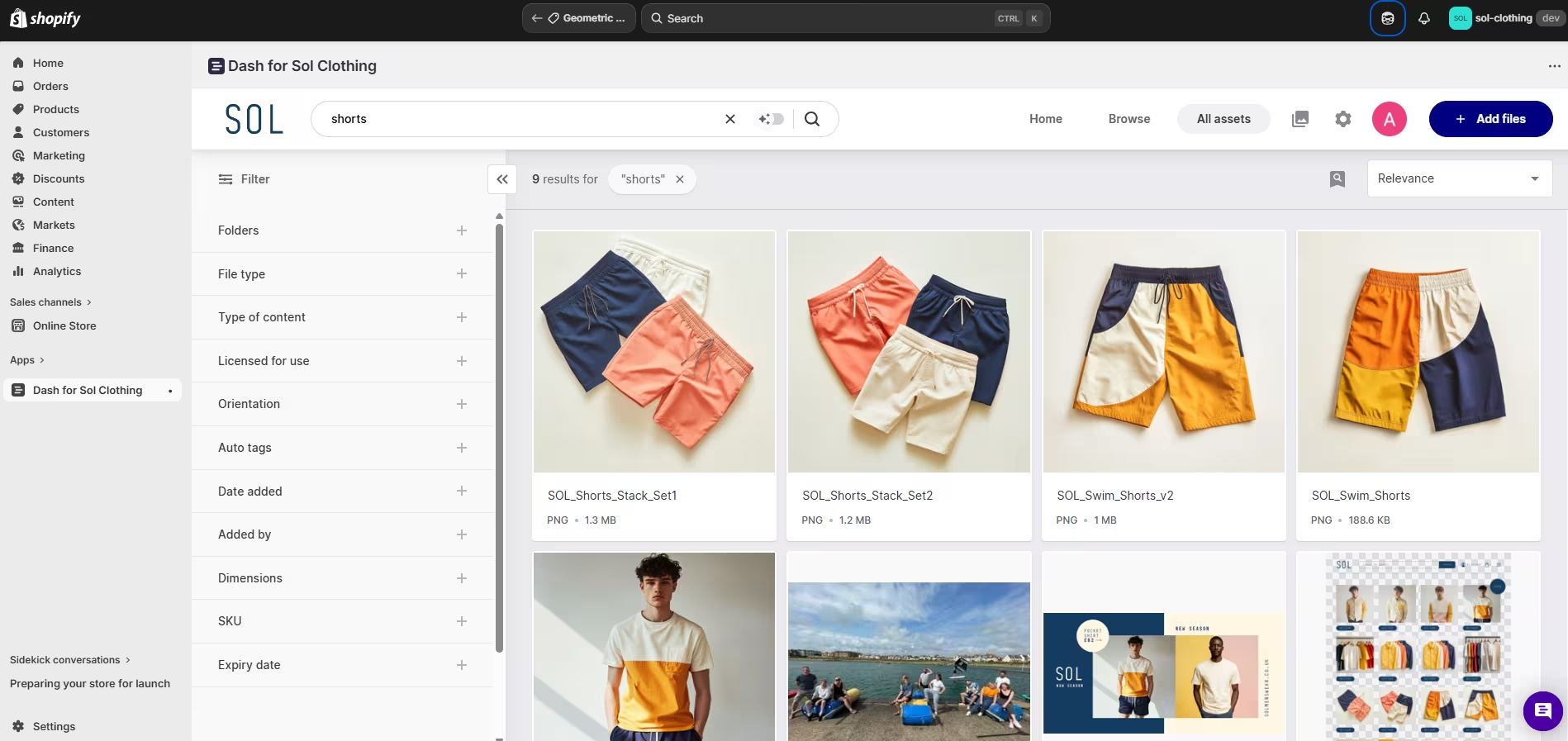
5. Find the asset you need and click Upload to Shopify.
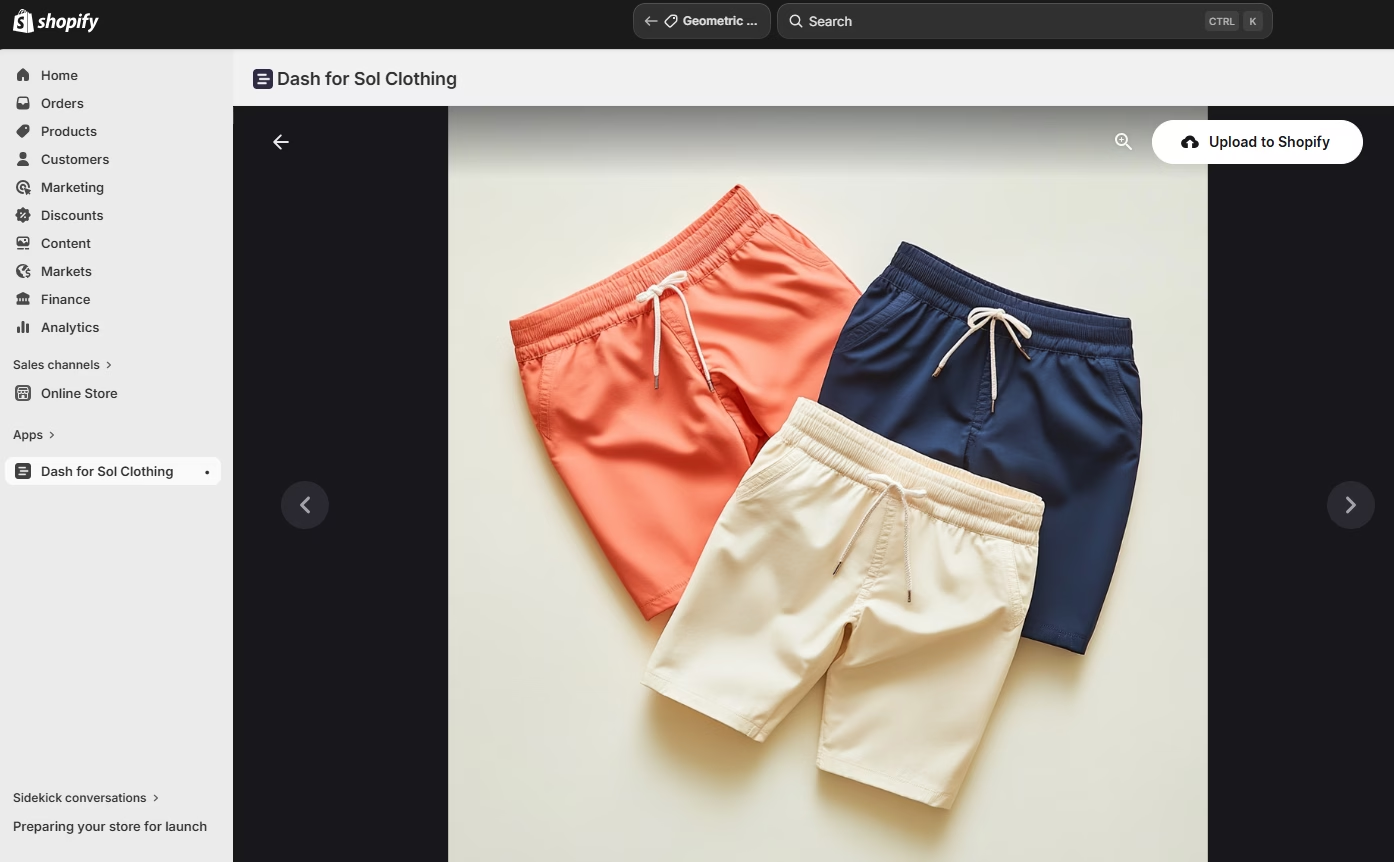
You can also use the same process for pages and blog posts. Navigate to your page or article, click More actions > Import image from Dash, upload your chosen asset to Shopify Files, and then insert it into your content via the editing toolbar.
Bulk-launching a new collection
For larger launches—dropping a hundred SKUs at once, refreshing an entire category—the Shopify connector really comes into its own.
The key is tagging your assets with SKU codes inside Dash before you export.

Once that's done:
1. Paste your SKUs into Dash's search bar or SKU field to pull up all relevant product images at once.

2. Select all and go to Share > Export to Shopify.
3. Resize and crop assets to your store's required dimensions if needed.
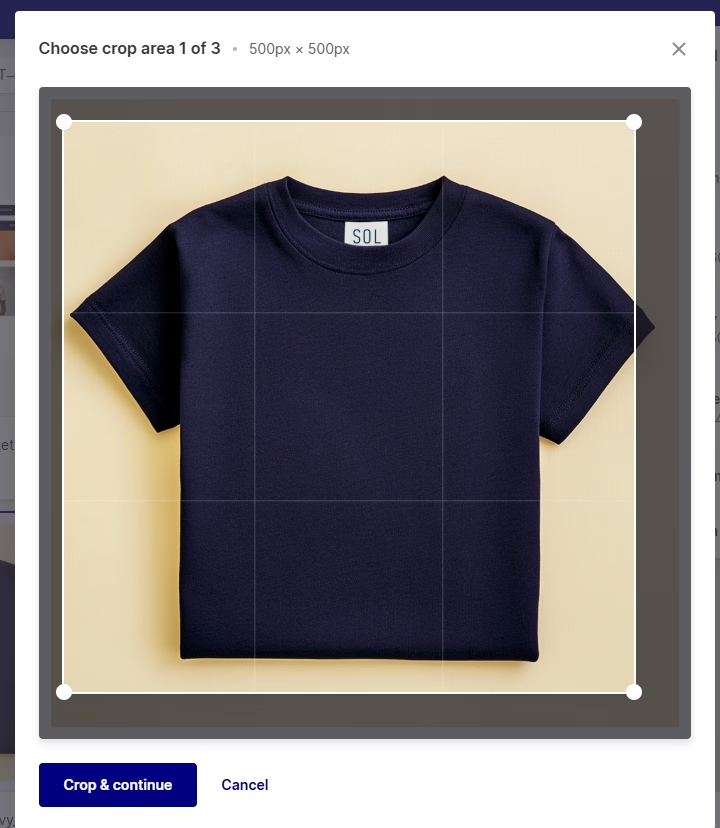
4. Log into your store when prompted—Dash will automatically match each asset to its corresponding product using the SKU tags.

5. Review the matches, set your image order, and hit publish.
How to get set up your Shopify integration in Dash
Getting started is straightforward, though you'll need to be both a Dash admin and a Shopify admin for the installation to work.
- Send the Dash team a message via the in-app chat and ask us to enable the Shopify integration for your account.
- We'll send you a unique installation link — click it and you'll see the Dash Shopify app installation screen.
- Click install
- You'll be redirected to log into Dash. Enter your credentials or use one of the social login buttons.
- Once you see the "All set up!" confirmation screen, click Back to Shopify.
That's it! The Shopify connector is live and ready to use.
⚠️ If you see an error saying ‘You need to upgrade your Dash plan’, it usually means you're logged into a Dash account without admin rights. Try again with an admin account.
Launch products faster with Dash
Ready to launch your new product collections on Shopify? Dash takes the admin out of asset management. 🙌
If you're already a Dash customer, get in touch via the in-app chat and we'll get you set up.
And if you’re not on Dash yet book a demo with a member of our team who can help you get started with a 14-day free trial.

Barney is the Marketing Lead for Dash. He writes about small business marketing strategies and how DTC brands can boost sales.